Worldwide shipping
Shipping & Returns
Quality assured
Find retail locations
Expert support
For All Your Questions
Fast and secure
For All Your Questions

Shipping & Returns
Find retail locations
For All Your Questions
For All Your Questions
In case we have not met, I’m Alexa Williams, Ask Alexa. I have worked here at Etelux for almost 15 years establishing great relationships with our customers and partners. Throughout my career at Etelux, I have had the pleasure of advocating for you, the customer, to make sure that you are taken care of. Most of the time, I am the friendly voice that answers the corporate phone line, so if we have not met in person, I’m sure we have talked. This form is to reach me directly, and I will respond as soon as I can. You can ask me anything, such as questions about our enclosures, help with which replacement parts to order, certification questions, etc…
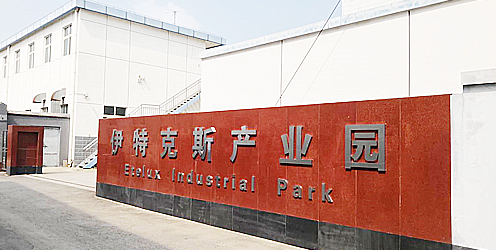
Serving the Chinese scientific industry for over 15 years, discover how quality products, competitive pricing, and next day delivery allow us to achieve our mission “Enabling Technology for a Better World ".
Ultricies eu consectetur vitae donec scelerisque ante a ut morbi aptent tincidunt est non sagittis ut.



Shipping & Returns
Find retail locations
For orders above $100
For All Your Questions

A common glovebox story goes like this:
In many cases, the glovebox isn’t failing.
What’s happening is simpler (and more painful): your workflow is continuously importing contamination.
A glovebox is a closed ecosystem. If you keep adding oxygen, moisture, or solvent vapor—even in tiny amounts—your “stable ppm” becomes harder and harder to maintain.
Here are the five most common contamination inputs, ranked by how often they cause real-world instability—and what to fix first.
The biggest mistake is treating the antechamber as a quick door:
That means every transfer is like adding a small “dose of air.”
Small doses accumulate fast.
Fix (high impact, low effort):
If your supplier can’t provide clear guidance on purge cycles and setpoints, you’ll end up inventing the workflow through trial and error (and wasted purifier life).
This is the silent killer because it doesn’t always show up as a dramatic ppm spike.
Common offenders:
These materials can release moisture and volatiles for hours or days, keeping your glovebox in a constant uphill recovery mode.
Fix:
Gloves absorb and hold:
Then every movement inside the box acts like agitation—releasing what’s on the glove surface back into the chamber.
Fix:
Even if you minimize external inputs, internal conditions can amplify instability:
This is why two gloveboxes with similar ppm can behave differently under real workflows.
Fix:
Purifiers are powerful, but they’re not magic.
If you keep importing moisture/solvent vapor daily, you’ll see:
When recovery slows, don’t jump straight to “replace everything.”
First, identify the input that’s causing the load.
Fix:
No account yet?
Create an Account