Worldwide shipping
Shipping & Returns
Quality assured
Find retail locations
Expert support
For All Your Questions
Fast and secure
For All Your Questions

Shipping & Returns
Find retail locations
For All Your Questions
For All Your Questions
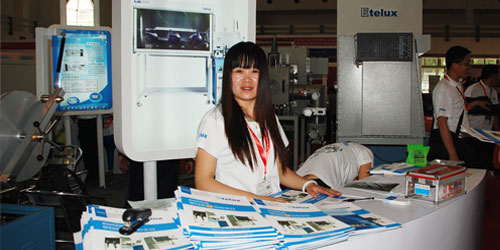
In case we have not met, I’m Alexa Williams, Ask Alexa. I have worked here at Etelux for almost 15 years establishing great relationships with our customers and partners. Throughout my career at Etelux, I have had the pleasure of advocating for you, the customer, to make sure that you are taken care of. Most of the time, I am the friendly voice that answers the corporate phone line, so if we have not met in person, I’m sure we have talked. This form is to reach me directly, and I will respond as soon as I can. You can ask me anything, such as questions about our enclosures, help with which replacement parts to order, certification questions, etc…
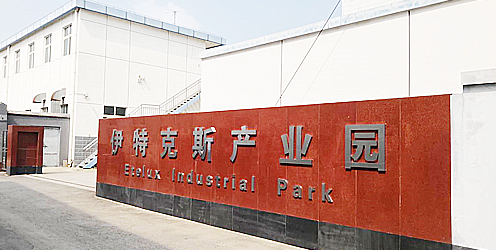
Serving the Chinese scientific industry for over 15 years, discover how quality products, competitive pricing, and next day delivery allow us to achieve our mission “Enabling Technology for a Better World ".
Ultricies eu consectetur vitae donec scelerisque ante a ut morbi aptent tincidunt est non sagittis ut.



Shipping & Returns
Find retail locations
For orders above $100
For All Your Questions
If you’ve compared gloveboxes online, you’ve seen the same pattern:
low ppm claims, stainless steel chambers, “advanced purification,” and a nice-looking control panel.
But in real use, two gloveboxes with similar specs can feel completely different:
This blog is a buyer’s shortcut. Ask these 10 questions. The quality of the answers will tell you more than any brochure.
ppm is an outcome. Leak rate is the foundation.
If a supplier can’t explain the test method and conditions, the “low ppm” number is mostly marketing.
Look for: pressure rise/decay testing, defined test conditions, recorded results.
This is the most practical performance metric for daily work.
Ask for: a recovery curve or at least a measured “time-to-threshold” after a standard transfer event.
If they only talk about “best-case ppm,” that’s a red flag.
An antechamber that’s slow becomes your daily bottleneck.
You don’t feel this in week 1—you feel it every day after.
Ask: evacuation time under a realistic load (not empty-chamber marketing conditions).
One pump-down often isn’t enough for porous items, packaging folds, and real lab transfers.
Look for: configurable cycles, setpoints, and automated programs that reduce operator variability.
A sensor reading is only as good as its placement and thermal environment.
Ask:
Sensors drift. That’s normal.
The real question is whether calibration and replacement are simple—or painful.
Ask:
If replacement requires major teardown, you’ll postpone maintenance and your data becomes less trustworthy.
“Purifier included” is not a spec. It’s a headline.
Ask:
Even if you don’t “run solvents,” many workflows import solvent residues through cleaning and packaging.
Outgassing is a slow contamination source that makes recovery look weak.
Ask:
This single mistake can contaminate the entire system in seconds.
Look for: interlocks + alarms + clear state indicators.
If the supplier relies on “operator caution,” that’s not engineering—that’s hope.
A glovebox is a system with ownership costs:
gloves, seals, filters, purifier media, sensor calibration accessories.
Ask for: a consumables list with recommended spares and typical intervals.
If they won’t discuss it, you’re buying an unknown cost curve.
No account yet?
Create an Account